

What Happens in the IVF Lab After Your Egg Retrieval?
The egg retrieval procedure is a milestone in the IVF process, but what happens next? Once eggs are collected, a highly specialized sequence of events begins in our laboratory — each step carefully designed to maximize potential for fertilization and healthy embryo development.
From Retrieval to the Laboratory
During the egg retrieval, an embryologist receives the follicular fluid collected and identifies the eggs under a microscope. Each egg is evaluated for maturity, as only eggs that have completed the first stage of meiosis are candidates for fertilization. Mature eggs are then placed in a controlled culture environment that closely replicates the environment of the human body.
Fertilization and Early Embryo Development
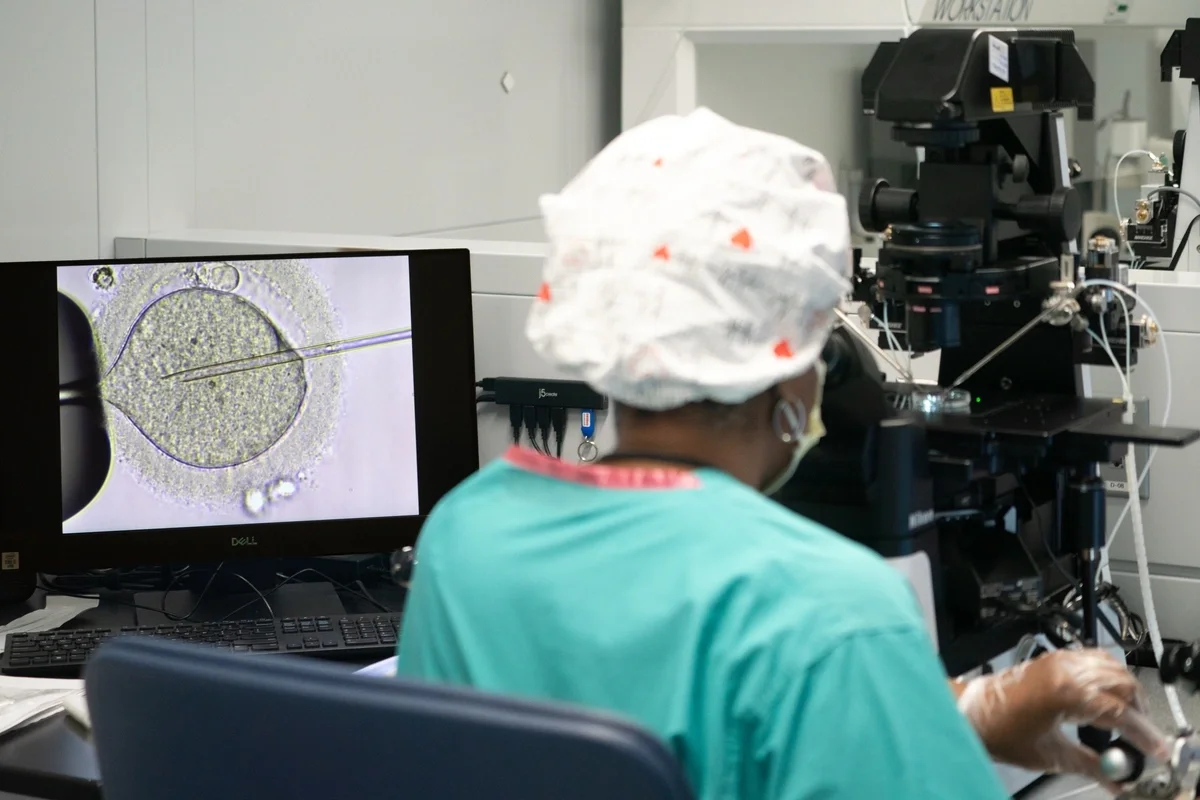
Fertilization occurs on the same day as retrieval, using conventional insemination or intracytoplasmic sperm injection (ICSI), in which a single sperm is injected directly into each mature egg. ICSI is commonly recommended in cases involving male factor infertility, previously unsuccessful fertilization, or the use of donor or frozen sperm. Over the following five to six days, the embryologist monitors the developing embryos as they progress through distinct cellular stages, ideally reaching the blastocyst stage — the developmental point at which embryos are most commonly selected for transfer or cryopreservation.
Genetic Testing and Cryopreservation
For patients who elect preimplantation genetic testing (PGT), a small biopsy is taken from the blastocyst before transfer occurs. This analysis screens for chromosomal abnormalities and can significantly inform which embryos are most likely to result in a successful pregnancy. For patients who choose to pursue preimplantation genetic testing (PGT), embryos remain frozen while awaiting results before a transfer decision is made. Embryos not transferred in a fresh cycle are vitrified,a rapid-freeze technique that preserves cellular integrity for future use. Cryopreservation is a central component of fertility preservation for oncofertility patients and individuals planning for future family building.
The laboratory phase of IVF reflects decades of scientific advancement, and the expertise of the embryology team is integral to every outcome. At NYU Langone Fertility Center, each patient's embryos are managed with rigorous clinical standards and individualized attention. To learn more about the IVF process or to begin exploring your options, schedule a consultation with our team today.
Categories
The NYU Langone Fertility Center Blog
At NYU Langone Fertility Center, our first job is to support our patients as they become educated about their reproductive health and fertility treatment options. Our blog connects patients with the most up-to-date information, technologies, and insights into fertility care. From egg freezing to IVF to third-party reproduction options, we explore every facet of assisted reproductive technology and empower patients with the knowledge they need to navigate their family building journeys.